What Is a Good Ramp for a Single Garage Step? A Short Guide
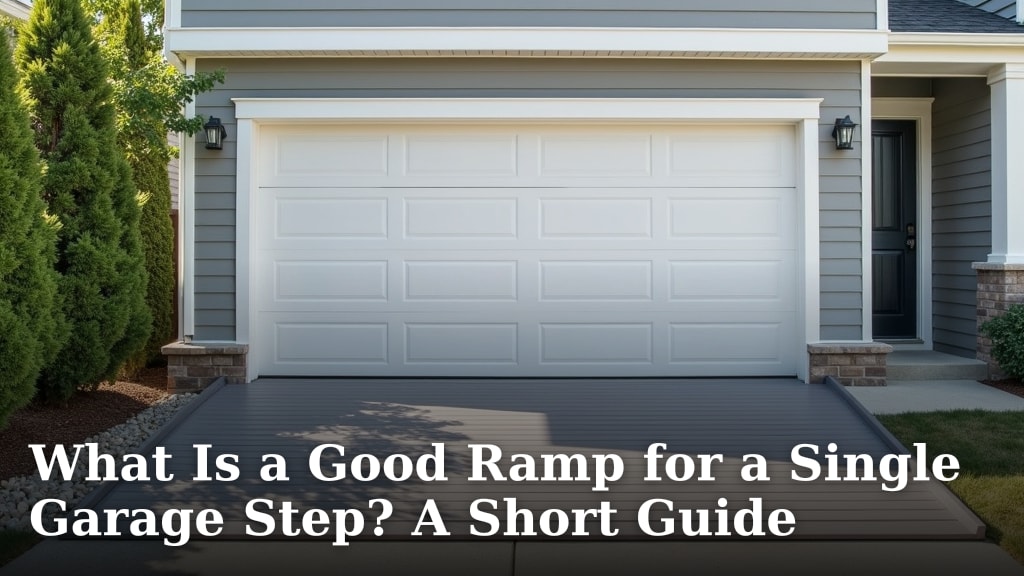
Finding the right ramp for a single garage step is simpler than you might think. A good ramp offers stable access without taking up too much space. You’re looking for something sturdy, with a non-slip surface, and the correct height and width for your specific step. Many readily available options can make getting in and out of your garage much easier.
When considering a ramp, think about the materials and design. Many common ramps are made from durable rubber or aluminum. These materials are chosen for their ability to withstand weather and regular use. The key is to find a ramp that fits your step’s dimensions securely to prevent any wobbling or accidents.
- A good ramp makes your single garage step easy to navigate.
- Look for ramps made of durable materials like rubber or aluminum.
- Ensure the ramp has a non-slip surface for safety.
- Check that the ramp’s Check that the ramp’s height and width match your step, and learn what tool to use to measure ramp slope accurately.height and width match your step.
- Proper installation ensures a secure and stable entryway.
We’ve gathered some helpful information to guide you. Let’s look at what makes a ramp suitable for a single garage step.
“`htmlChoosing the Right Ramp for Your Garage’s Single Step
So, you need a ramp for that single step leading into your garage? You’re not alone! Many homes have a small elevation change, and a ramp is a great way to make it accessible for everyone. Think of it as a bridge for your feet, whether you’re pushing a stroller, walking with a cane, or even maneuvering a rolling cart.
What makes a ramp “good” for this specific situation? It’s about safety, stability, and a good fit. You don’t want something wobbly or too steep. It needs to feel secure underfoot. The best ramps for a single garage step are usually compact and designed for this exact purpose.
Key Features of a Suitable Garage Step Ramp
When you start looking at ramps, you’ll notice a few common themes. These are the things that make one ramp better than another for your garage step. They all boil down to making your life easier and safer.
Material Matters: Durability and Grip
The material of your ramp plays a big role. You want something that can handle the elements, especially if your garage is exposed to rain or sun. Common choices offer different benefits.
Rubber Ramps
Rubber ramps are a popular choice for good reason. They offer excellent traction, which is vital for preventing slips. They are usually heavy enough to stay put on their own. Plus, rubber is flexible and can conform slightly to the ground, creating a stable base. Many rubber ramps are made from recycled tires, making them an eco-friendly option too. We found that rubber ramps tend to be very durable and long-lasting, resisting wear and tear from frequent use.
Aluminum Ramps
Aluminum ramps are known for being lightweight yet strong. This makes them easier to move if you ever need to reposition them. Aluminum doesn’t rust, which is a plus if you live in a humid climate or experience a lot of rain. Some aluminum ramps come with a textured surface for added grip. While they might be a bit more rigid than rubber, they offer excellent structural integrity. We’ve seen many designs that are both functional and sleek.
Composite Ramps
Composite materials, often a blend of wood fibers and plastics, offer a middle ground. They can look like wood but are more resistant to rot and warping. These ramps are often designed with built-in non-slip surfaces. Their durability is typically good, though we’ve found they might not always match the extreme weather resistance of solid rubber or aluminum.
Size and Fit: Precision is Key
This is where things get specific to your garage step. A ramp that’s too big or too small just won’t work well.
Height Requirements
Your ramp needs to match the height of your single step. For a standard single garage step, you’re often looking at a height of 4 to 6 inches. The ramp should smoothly transition from the ground up to the garage floor. Too steep, and it becomes difficult or even dangerous to use. Too short, and it won’t cover the rise of the step effectively. We recommend measuring your step accurately before you buy. We recommend measuring your step accurately before you buy, and our guide on how to calculate wheelchair ramp length from rise can help.
Width Considerations
The width of the ramp should accommodate what you’ll be moving. If you’re just walking, a narrower ramp might suffice. But if you plan to push a stroller, a wheelchair, or a heavy cart, you’ll want a wider ramp. Many single-step ramps are around 30-36 inches wide. This provides enough space for most common mobility devices and equipment. Ensure it fits comfortably without being a tripping hazard.
Length and Slope
The length of the ramp determines its slope. A gentler slope is always better for safety and ease of use. For accessibility standards, a slope of 1:12 is often recommended, meaning for every inch of rise, you have 12 inches of ramp length. For a 5-inch step, this means a ramp length of at least 60 inches (5 feet). However, for a single garage step where space might be limited, many users opt for slightly steeper, but still manageable, slopes. Many experts suggest keeping the slope as gentle as possible, especially if the ramp is used frequently (ADA). If your ramp is too short, the incline will be too steep.
Safety Features: Non-Slip Surfaces and Stability
Safety is non-negotiable. Your ramp needs to be a reliable tool, not a hazard.
Traction is Top Priority
A non-slip surface is essential. Look for ramps with textured patterns, raised bumps, or a rubberized coating. This helps prevent slips, especially when the ramp is wet or snowy. We found that ramps designed with integrated grip patterns are generally more effective than those relying solely on the material’s natural texture.
Secure Placement
How does the ramp attach, or does it sit securely? Some ramps have pre-drilled holes for bolting them down. Others are heavy enough to stay in place. For a permanent solution, bolting is best. For a temporary fix, ensure the ramp has a good, non-slip base and perhaps a lip that helps it grip the step. You don’t want it sliding out from under you. Stability is built on both the ramp’s weight and how well it connects to the step and the ground.
Types of Ramps for a Single Garage Step
When you’re shopping, you’ll encounter a few common designs. Each has its own advantages for a single step.
Solid Ramps
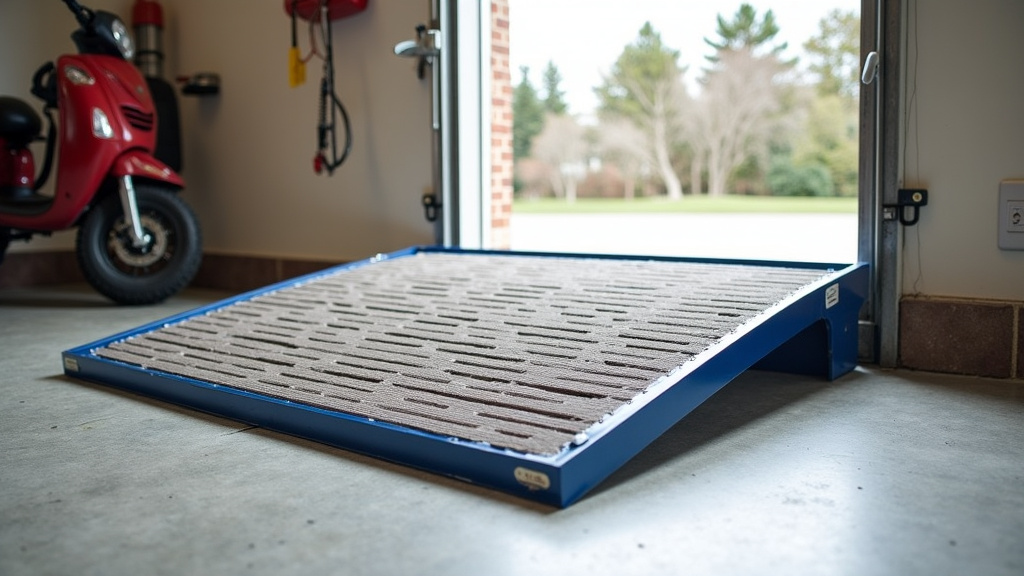
These are typically a single, solid piece. They are often made from rubber, aluminum, or composite materials. Solid ramps offer great stability and are easy to install – usually just place and go, or bolt down. They provide a consistent surface to roll or walk over. Their main drawback can be their weight, but for a permanent spot, that’s often a good thing.
Portable or Folding Ramps
While less common for a permanent garage step, some lighter-weight aluminum ramps fold or are designed for portability. These are useful if you need to move the ramp often. For a single garage step, they might be overkill unless space is extremely limited and the ramp needs to be stored away. We found that for a fixed step, a solid ramp is usually the more practical and secure choice.
Threshold Ramps
These are often smaller, wedge-shaped ramps designed to cover a small rise, like a door threshold or, indeed, a single garage step. They sit directly against the step. Many are made of rubber and are quite heavy, providing excellent stability. They don’t require installation and are very user-friendly. These are often a perfect fit for a single step if the height is right.
Installation and Maintenance Tips
Getting your ramp set up correctly is important for safety. And a little care keeps it working well for years.
Proper Installation for Stability
If your ramp comes with mounting holes, consider using them. Anchoring the ramp to the concrete floor or the garage step can prevent any shifting. Use appropriate anchors and fasteners for your surface. If you’re not drilling, ensure the ramp has a solid, non-slip base. For rubber or composite ramps, sometimes placing a heavy rubber mat underneath can add extra grip. A ramp that feels solid and doesn’t move is a safe ramp.
Keeping Your Ramp in Good Condition
Regularly check your ramp for any signs of wear and tear. Look for cracks, loose parts, or a worn-down non-slip surface. Clean it periodically to remove dirt, debris, or any slippery substances. A simple sweep or hose-down is often all that’s needed. Keeping it clean ensures the traction remains effective. Many experts suggest an inspection at least every six months (Occupational Safety and Health Administration).
Quick Checklist for Your Garage Step Ramp
Before you make your choice, run through this quick checklist. It will help ensure you’re getting the right ramp for your needs.
- Does the ramp’s height match your garage step?
- Is the ramp wide enough for your needs?
- Does it have a reliable non-slip surface?
- Is the material durable and weather-resistant?
- Can it be securely placed or anchored?
- Is the slope manageable and safe?
Taking a moment to consider these points will help you find a ramp that makes accessing your garage a breeze. You want a solution that offers peace of mind and reliable support every time you use it.
“`Conclusion
Choosing the right ramp for your single garage step boils down to a few key factors: proper fit, durable materials, and built-in safety. We’ve found that rubber and aluminum ramps often provide the best combination of grip and longevity for this specific use. Always measure your step’s height and consider the width needed for your equipment. By focusing on a ramp with a non-slip surface and a secure placement, you’ll create a much safer and more accessible entryway. Your next step is to measure your garage step and start browsing ramps that meet these essential criteria to make your garage easier to use.
Frequently Asked Questions
How high should a ramp for a single garage step be?
For a typical single garage step, you’re usually looking for a ramp with a rise of 4 to 6 inches. The ramp needs to match this height precisely to ensure a smooth transition from the ground to your garage floor. This prevents the ramp from being too steep or too short, which could create a safety hazard.
What’s the best material for a garage step ramp?
We found that rubber ramps offer excellent traction and durability, often being heavy enough to stay in place. Aluminum ramps are a great alternative because they are lightweight yet strong and resist rust. Both are good choices, but prioritize the material’s grip and ability to withstand weather.
Do I need to install the ramp, or can I just place it?
Some ramps are designed to be placed down and rely on their weight and a non-slip base for stability. However, for maximum safety, we recommend ramps that can be bolted down to the concrete or step if they come with mounting holes. Secure installation prevents any accidental shifting.
How wide should a ramp for a single garage step be?
The ideal width depends on what you’ll be moving. If it’s just for walking, a narrower ramp might work. But for strollers, wheelchairs, or carts, aim for a ramp that’s around 30-36 inches wide. This ensures you have enough space to maneuver comfortably without the ramp becoming a tripping hazard.
How often should I check my garage step ramp for wear?
It’s wise to inspect your ramp at least every six months. Look for any cracks, loose components, or a worn-down non-slip surface. Keeping the ramp clean will also help maintain its traction and ensure it remains a safe access point.