How to Choose a Height-Adjustable Wheelchair Ramp
Choose an adjustable-height wheelchair ramp by matching its supported rise to your measured step, then check ramp length, landing space and the user’s mobility device. Height adjustment only helps within the ramp’s stated range and setup limits.
On this page (6 sections)
Choose an adjustable-height wheelchair ramp by matching its supported rise to your measured step, then check ramp length, landing space and the user’s mobility device. Adjustment helps only when the measured rise falls within the ramp’s stated range and the setup leaves a usable approach.
Measure the vertical distance from the lower landing to the surface you need to reach. Then check whether the ramp’s length and end plates work in the available space.
Height adjustment can mean several things. Some ramps have support legs that extend, while others have plates or a design intended to span a range of threshold heights.
Our guide to what types of wheelchair ramps involve explains the main styles.
How do you choose an adjustable-height wheelchair ramp?
Choose a ramp whose supported height range includes your measured rise, with enough length and clear landing space for the person using it. Do not treat “adjustable” as a sign that one ramp fits every doorway or step.
Start with a tape measure. Measure straight up from the lower surface to the top edge of the threshold or step, and record the result in inches.
Next, check the ramp’s stated height guidance. A model may be intended for a range of rises but still have a recommended maximum step height for wheelchair use.
Follow the more specific use guidance.
Then confirm the other measurements that affect fit:
| What to measure | Why it matters |
|---|---|
| Vertical rise | Confirms the ramp can reach the upper surface |
| Available ramp run | Determines whether the ramp fits without an overly steep approach |
| Clear width | Checks that the device can pass between rails or edges |
| Top and bottom landing space | Gives room to approach, turn or pause |
| Door swing or track | Helps prevent the ramp from blocking a door |
A ramp length and height calculator guide can help you understand how rise and ramp run relate. Treat a calculator as a planning aid, and follow the ramp maker’s instructions for the specific model.
What kinds of height adjustment are available?
Height adjustment usually comes from support legs, end plates or a fixed ramp designed for a stated threshold height. The adjustment method affects where the ramp can sit and how much setup space it needs.
Support legs for a changing rise
Support legs can hold up a longer ramp at a set height, which may help when you need a raised approach over steps. Check how the legs adjust, where they contact the ground and whether the ramp instructions call for a particular surface.
A longer ramp may need a stable landing at the top and bottom as well as correct leg placement. Don’t assume that extending the legs alone makes the ramp ready for use.
Extension plates for a threshold
Some portable ramps use extension plates that sit on the upper and lower surfaces. They can help the ramp bridge a threshold, but the plates need room to lie flat and may affect door clearance.
Measure both sides of the doorway, including the space beside a sliding door track. A ramp may fit the height but still prevent the door from opening.
Fixed-height threshold ramps
A fixed-height threshold ramp is designed around a particular rise rather than adjusted across a broad range. It may suit a single doorway or small level change when its height matches the threshold.
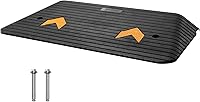
For example, the VEVOR ramp is a 3 in rise rubber threshold ramp with beveled edges and a grooved tread. It is a fixed-height option for a threshold or step measuring 3 in.
How much ramp length do you need for the rise?
A ramp needs enough horizontal run for the rise and the user’s ability, as well as room for both end plates. A ramp that reaches the top can still be too steep for comfortable or controlled use.
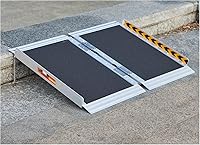
For a portable 2 ft ramp, FACHNUO gives a height range of 2 to 6 in, but recommends that a step used for wheelchair access be no more than 4 in high. That guidance matters more than the broad height range when you’re comparing setups.
For a higher rise, compare longer options and their support requirements. FACHNUO recommends its 6 ft ramp for heights of 6 to 18 in and advises against choosing a ramp shorter than four times the step height.
Those examples show why length and adjustment range need to be considered together. See our best telescoping adjustable wheelchair ramps guide for ramps that extend or retract to different lengths.
What else should you check before choosing?
Check device fit, surface contact and the path through the doorway before deciding that a ramp is suitable. A height match alone does not confirm that your wheelchair or scooter can use it.
Measure the clear width of the ramp and compare it with the full width of the device, including wheels or other parts that extend outward. For folding ramps, also check the folded size and carry weight if you will move and store the ramp often.
Check how each end rests on the landing. The FACHNUO 2 ft ramp calls for its front extension plate to sit fully flush with the ground for safer, more stable use.
It also warns that a wheelbase over 27 in won’t fit its design.
For doorways, consider the opening direction and the size of the extension plate. FACHNUO notes that its side walls and plate can affect a hinged door or obstruct a sliding door track if clearance is tight.
Portable options come in several styles, each with different storage and setup needs. Compare the best portable wheelchair ramps if you want a broader view of folding and other portable designs.
If the rise is small and the available space is tight, a compact ramp could fit better than a longer model. Our small wheelchair ramp guide covers options for short transitions.
When should you choose a different ramp style?
Choose a different style when the adjustable model cannot match your rise, fit your landing or provide a suitable approach. A curved wheelchair ramp may help when the route needs to bend around an obstacle.
The right style depends on whether you need a short threshold transition or a longer path over steps.
A roll-up ramp may suit someone who needs a portable option that can be rolled for storage. Read how to choose a roll-up wheelchair ramp for the trade-offs.
If you need a ramp that changes length by sliding sections, compare telescoping models. If your need is limited to one doorway height, a fixed threshold ramp may be simpler to position.
How do adjustable ramps compare with roll-up ramps?
An adjustable ramp changes its supported height or setup position within a stated range; a roll-up ramp is chosen for its roll-up design. Neither style removes the need to measure the rise, check clear width and leave space for the ramp’s ends.
For any style, follow the manufacturer’s directions and check the ramp is secure before use. If you’re unsure whether a particular setup suits the user’s device or abilities, ask a qualified access professional to assess it.
What is the best way to decide?
Pick the ramp that fits the measured rise and the available run, then confirm its width, end-plate clearance and stated use guidance. Choose a fixed-height model for one consistent threshold, a shorter portable ramp for a low rise within its limits, or a longer supported ramp when its range and landing space suit the steps.
Measure the doorway and route before you buy. If the ramp will be used at a home entrance, start with our portable wheelchair ramp guide to compare styles and setup needs.
Frequently asked questions
What does height adjustable mean on a wheelchair ramp?
It means the ramp has a stated range of heights or setup positions that can match different rises. Check the supported range and any use limits, then measure your step or threshold from the lower surface to the top.
Adjustment does not make every ramp suitable for every rise.
How do I choose the right ramp height?
Measure the vertical rise from the lower landing to the top of the step or threshold. Choose a ramp whose supported height includes that measurement, then confirm its recommended ramp length, landing space, width and device fit.
Follow the ramp maker’s setup guidance.
Can I use a short ramp for a tall step?
A short ramp can create a steep approach at a tall step, even if its height range includes the rise. Check the maker’s length guidance and consider whether the person can manage the angle safely.
If the available space is limited, ask a qualified access professional to assess the setup.
Are adjustable wheelchair ramps suitable for doorways?
Some portable ramps are intended for doorways, but fit depends on the threshold height, door swing, clear width and room for extension plates. Measure the doorway and check whether the ramp blocks a hinged or sliding door.
A fixed-height threshold ramp may suit a single, consistent rise.
Do adjustable ramps need support legs?
Some longer ramps include support legs, while shorter portable ramps may rest on their end plates. Check the specific ramp’s setup instructions and use its supports as directed.
The ramp must sit securely at both ends, with its plates flush to the landing surfaces.