How to Choose a Roll-Up Wheelchair Ramp
Choose a roll-up wheelchair ramp by checking the rise, usable ramp length, surface, and storage fit. Make sure the approach and landing leave room to line up and roll safely.
On this page (9 sections)
- What is a roll-up wheelchair ramp?
- How do you choose the right ramp length?
- Will a roll-up ramp fit your doorway or steps?
- What surface and safety features should you check?
- How much storage space does a roll-up ramp need?
- Which ramp examples fit different access needs?
- What should you check before rolling onto the ramp?
- How do you choose a roll up wheelchair ramp?
- More questions about roll-up wheelchair ramps
A roll up wheelchair ramp should match the rise you need to cross, the path available, and the space where you'll store it. Check how it sits at both ends, whether its surface suits your setting, and whether you can carry and position it as intended.
Measure the rise from the lower floor to the top landing, then measure the space available for the ramp and for turning or stopping. For an entry with a turn, compare curved wheelchair ramp options and check the landing and turning space.
A ramp that rolls up for storage still needs a suitable length and stable support when in use.
If you are comparing other portable designs, our best portable wheelchair ramps guide covers options with different storage and setup needs.
What is a roll-up wheelchair ramp?
A roll-up wheelchair ramp is a portable ramp that can be rolled or folded into a smaller form for storage or transport. The rolled form saves space, but it does not determine whether the ramp is long or stable enough for your access point.
Designs vary in material, width, surface, edge treatment, end fittings, and storage shape. Some portable ramps fold at a hinge rather than roll, so check how the specific ramp stores and what space it needs.
Think about who will set it up and move it. A compact ramp may still be awkward to carry, and a long ramp may need more room to position than the stored size suggests.
For a closer look at the difference between removable and fixed access, read What Is a Removable Wheelchair Ramp? A Focused Guide.
The wider wheelchair ramp types guide can help you compare portable, threshold, and other ramp designs.
How do you choose the right ramp length?
Choose ramp length by measuring the vertical rise and checking the ramp maker's guidance for that rise and your equipment. A longer ramp generally creates a gentler incline over the same rise, but it also takes more floor space.
Measure straight up from the lower surface to the top surface. Then measure the usable run from the start of the ramp to the landing, including room to approach and move away.
A rough planning ratio can help you compare options, but it is not a substitute for the ramp's instructions or an assessment of your route. Users who need assistance, have a power chair, or face a tight turn should check the setup with a qualified accessibility professional.
| Check | What to measure | Why it matters |
|---|---|---|
| Rise | Vertical height from lower surface to landing | Sets the length and ramp angle needed |
| Run | Clear floor distance for the ramp | Confirms the ramp can fit without blocking a path |
| Width | Clear width between edges or rails | Must fit the chair or scooter and allow alignment |
| Landing | Clear, level space at the top and bottom | Gives room to stop, turn, and move away |
| Storage | Rolled or folded size and carrying weight | Shows whether it fits and can be moved as planned |
Do not choose a ramp solely because its advertised length seems close to the rise. Check the stated suitable height range, load limit, and equipment fit for the exact model.
For a ramp that needs to accommodate changing heights, compare an adjustable height wheelchair ramp and confirm its adjustment range covers your measured rise.
Will a roll-up ramp fit your doorway or steps?
A ramp fits only when its width, end position, and full path work with the doorway or step. Measure the narrowest clear opening, then account for door swing, trim, handles, and any extension plate.
Check whether the ramp's top end can meet the upper surface without a gap or an unstable edge. At the bottom, make sure it rests on a firm, level surface and does not slide or rock.
For doorways, open and close the door with the ramp in its intended position. Hinged doors, sliding doors, and screen doors can each need different clearance.
A small threshold ramp may be more practical than a long portable ramp for a short, low transition. See best small ramps for wheelchairs for compact options, and compare a wheelchair ramp kit guide if you need a more permanent setup.
What surface and safety features should you check?
Choose a ramp surface suited to the location and conditions where you'll use it. A textured surface can provide traction, but rain, dirt, loose material, or ice can still affect footing and wheel grip.
Check the ramp's instructions for indoor or outdoor use, cleaning, and weather exposure. Look for edges or guides that help keep wheels aligned, and make sure they do not interfere with your chair, hands, or doorway.
Before each use, confirm that the ramp is fully positioned, supported, and free of debris. Do not use it if it shifts, rocks, bends unexpectedly, or has visible damage.
The load limit must account for the combined weight of the user, wheelchair or scooter, and anything being carried. Keep within the stated limit and follow the manufacturer's setup instructions.
How much storage space does a roll-up ramp need?
Check the ramp's stored dimensions and weight, then test whether the ramp fits the actual place where you plan to keep it. A rolled ramp can need more length or diameter than a closet shelf or vehicle compartment allows.
Consider the full routine: removing it from storage, carrying it to the access point, positioning it, and putting it away again. A ramp that is easy to store but difficult to handle may not suit daily use.
Measure the storage opening, not just the empty interior. Also consider whether the stored ramp can be kept clean, dry, and easy to reach without blocking an exit.
Which ramp examples fit different access needs?
These examples show why matching ramp style to the access point matters. They include a threshold ramp and two folding aluminum ramps, so they are comparisons rather than roll-up models.
A low doorway threshold
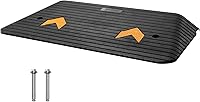
For a low, fixed threshold, a one-piece rubber ramp may avoid the need to carry a longer ramp in and out. Check that its height matches the threshold and that the width fits your doorway and equipment.
The VEVOR ramp measures 35.5 x 17.7 x 3 in and weighs 29 lb. Its one-piece design needs no tools to assemble or take apart, but that weight may make frequent repositioning difficult.
Consider it for a stable threshold transition where the fixed size and weight suit the location. Measure the threshold and door clearance before choosing it.
A short step with a compact folding ramp
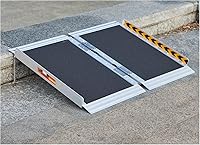
A short folding ramp may suit a small rise when there is limited space for a longer ramp. Check the height guidance, usable width, and setup details against your exact step and equipment.
The FACHNUO 2 ft ramp weighs 10.9 lb and folds to 24 x 13.2 x 3.2 in. Its instructions recommend keeping step height at or below 4 in for wheelchair access, even though the stated height adjustment range is 2 to 6 in.
The ramp's wheelbase guidance and extension plate clearance matter too. The front extension plate needs to sit flush with the ground, and the wheelbase should not exceed 27 in.
Consider it for a low step and occasional transport if the ramp's limits match your chair and setup. Check that it will not block a door or sliding track.
A taller step with a longer folding ramp
A taller access point can call for a longer ramp, but the available run and the ramp's instructions still determine whether the setup fits. Leave enough clear space at both ends for safe movement.
The FACHNUO 6 ft ramp measures 72 x 29 x 2 in unfolded and 36 x 15.6 x 6.3 in folded. It weighs 35.2 lb and has a stated maximum load of 800 lb.
The maker recommends a height of 6 to 18 in and advises against choosing a ramp shorter than four times the step height. Account for the weight and folded dimensions when planning transport and storage.
Consider it when a 6 ft ramp fits the site and the height falls within its guidance. Confirm the support legs sit correctly and the route leaves a clear landing.
What should you check before rolling onto the ramp?
Inspect the setup before each trip. Both ends should be secure, the surface should be clear, and the path should have enough room to line up and stop.
Use this quick check:
- Confirm the ramp is intended for the rise and equipment.
- Check the load limit against the combined user, chair, and cargo weight.
- Position the ramp as instructed and make sure it cannot shift.
- Confirm the approach and landing are clear and level enough for the setup.
- Check the surface for water, dirt, damage, or loose material.
- Make sure doors and nearby paths can still be used safely.
Ask for help with setup if the ramp is heavy, the landing is tight, or you are unsure whether the support is stable. Never improvise with loose boards or objects under a ramp.
How do you choose a roll up wheelchair ramp?
Choose a roll up wheelchair ramp by matching its suitable height and length to your measured rise, then confirming width, traction, support, and storage fit. A roll-up design is useful only if you can position it securely and move it safely.
Pick a compact threshold ramp for a low doorway transition when its height and width fit. Choose a longer portable ramp when the rise and available run call for it, and compare its stored size and carrying weight before deciding.
Before you buy, verify the equipment fit and setup guidance for your exact access point. If you need a different approach, start with our portable wheelchair ramp comparison.
More questions about roll-up wheelchair ramps
Can a roll-up ramp work for a power wheelchair?
It can, if the ramp's width, load limit, length, and setup guidance match the power chair and the access point. Check the chair's wheelbase and total weight with the user aboard, then confirm the maker allows that type of equipment.
Leave room for a controlled approach and landing.
Is a rubber threshold ramp a roll-up ramp?
No. A rubber threshold ramp is usually a one-piece ramp, while a roll-up ramp stores by rolling or folding into a smaller form.
A threshold model can still be portable, but its weight and fixed shape may make it less convenient to carry or store.
How do I know if a ramp is too steep?
Compare the rise and available ramp length with the maker's guidance for the specific ramp and equipment. If the angle looks steep, the ramp flexes, or the user cannot travel up and down with control, stop and reassess the setup.
A qualified accessibility professional can help evaluate difficult routes.
Frequently asked questions
How long should a roll-up wheelchair ramp be?
Choose a ramp long enough for the rise and the access method you use. Measure the vertical rise, then check the ramp maker's guidance for that height and your chair or scooter.
Leave room for a level approach and landing, and make sure the ramp can sit securely at both ends.
Are roll-up wheelchair ramps suitable for every doorway?
No. A ramp must fit the doorway width, threshold height, door swing, and available floor space.
Check whether its ends sit flat and whether the door can open without hitting the ramp.
A doorway ramp may work for a small threshold, while a taller step can need a longer ramp.
How do you store a roll-up wheelchair ramp?
Check the rolled dimensions and weight before buying, then compare them with the storage spot and the way you'll carry it. Keep the ramp dry and follow its care instructions.
A folding ramp has different storage needs, so compare its folded dimensions with your available shelf, closet, or vehicle space.
Can a roll-up wheelchair ramp stay outside?
Outdoor use depends on the ramp's materials, surface, weather exposure, and how securely it stays in place. Check the maker's care guidance, inspect the surface and edges before each use, and remove or secure the ramp when it is not in use.
Keep drainage and changing ground conditions in mind.
What should you check before using a portable wheelchair ramp?
Check that the ramp is rated for your combined load, wide enough for your equipment, firmly supported, and aligned with a clear landing. Confirm that its surface is clean and dry, its edges are stable, and any extension plate sits flush.
Follow the ramp maker's instructions and get help if setup is uncertain.