How to Install a Wheelchair Ramp at Home
For wheelchair ramp installation at home, measure the rise, choose a ramp system suited to that height, and follow its assembly instructions. Check the route, door clearance, landing space, and surface before using it.
On this page (8 sections)
- What should you check before wheelchair ramp installation at home?
- Which ramp type fits the entrance?
- How do you choose the ramp length and placement?
- How do you assemble a folding ramp?
- How should you place a threshold ramp?
- What should you check after assembly?
- When should you use a professional installer?
- What is the safest way to finish wheelchair ramp installation for homes?
For wheelchair ramp installation at home, measure the rise, select a ramp system suited to it, and assemble it exactly as instructed. Check the route, door clearance, landing space, and surface before anyone uses the ramp.
This guide covers placement and assembly of purchased home ramp systems. It doesn't cover building a custom wooden structure, which can require site-specific planning and local approval.
What should you check before wheelchair ramp installation at home?
Before installing a home wheelchair ramp, measure the height change, clear path width, and available space at both ends. Those measurements help you choose a ramp type and length that fits the entrance.
Measure from the lower ground to the top surface where the ramp will rest. Check the height at more than one point if the ground or threshold is uneven.
Measure the usable width of the route, including doorways and any narrow path beside the entrance. A ramp can fit the doorway and still block a door, a sliding track, or a walking path.
Look at what happens when the door opens. Leave space for its swing and for the person using the ramp to approach, stop, and turn safely.
Before buying, compare your measurements with the ramp's stated size and the maker's instructions. Our guide to the best wheelchair ramps for home covers options for different entry needs.
Which ramp type fits the entrance?
Match the ramp type to the height, route, and how often the entrance needs to be accessed. For powered scooter access at home, compare mobility scooter ramps for homes.
A small threshold, a short step, and a raised porch call for different layouts.
A threshold ramp can bridge a small change at a doorway. For more inside options, compare indoor wheelchair ramps.
A portable folding ramp can suit a step when it can rest securely at both ends and doesn't obstruct the door.
A longer ramp may be needed for a higher entrance, but space can limit the route. Ramps with turns may need landings, and a fixed installation may need professional planning.
For an overview of common designs, see what wheelchair ramp types involve. If you need a system that can be moved or stored, read what a removable wheelchair ramp is.
How do you choose the ramp length and placement?
Choose the length using the measured rise and the ramp maker's guidance, then confirm that the route fits without blocking access. Don't assume a ramp is suitable just because it reaches from the ground to the doorway.
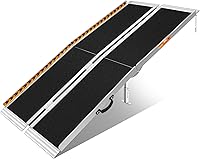
The FACHNUO 6 ft portable ramp is described for rises from 6 to 18 in, with a recommendation not to choose a length less than four times the step height. Use those figures as the maker's guidance for this ramp, and check its instructions against your entrance and mobility device.
Position the ramp so its upper and lower ends meet stable surfaces. Check whether its feet, extension plates, or support legs sit flat as instructed.
For a wood ramp kit, start with the route and available ground space. Our guide to choosing a wood wheelchair ramp kit can help you compare a kit with a portable system.
A mobile home may have a different entrance height and approach space than a ground-level doorway. See the guide to the best mobile home wheelchair ramp before settling on a layout.
How do you assemble a folding ramp?
Open and secure a folding ramp according to its instructions, then check that each contact point sits flat before use. Keep fingers clear of hinges while unfolding, and ask for help if the ramp is difficult to handle.
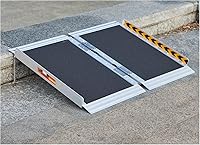
The FACHNUO 2 ft portable ramp is described for height adjustments from 2 to 6 in, with a recommendation that step height not exceed 4 in when used for wheelchair access. Its instructions also say the front extension plate should sit fully flush with the ground.
Check the doorway after setting the ramp in place. For track-specific advice, see threshold ramps for sliding doors.
The ramp's side walls and extension plate may affect door clearance, especially near a sliding door track.
If the ramp shifts, rocks, or leaves a gap at either end, stop and reposition it following its instructions. Don't try to correct an unstable fit with loose blocks or improvised supports.
For a folding design that can be moved between locations, compare best folding wheelchair ramps for home. Confirm the dimensions and placement instructions fit your doorway.
How should you place a threshold ramp?
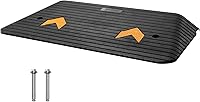
Set a threshold ramp on a firm, even surface with its beveled edges aligned to the approach. Check that the ramp height matches the threshold and that it doesn't interfere with the door.
The VEVOR rubber threshold ramp is 35.5 in long, 17.7 in wide, and 3 in high. It has beveled edges and a grooved tread surface, and its one-piece design needs no tools to assemble or dismantle.
Measure the threshold before placing the ramp. Confirm its width leaves enough clearance for the wheelchair or mobility device and doesn't cover a drain or create a trip hazard for others.
A threshold ramp isn't a substitute for a longer ramp where the rise needs a gradual route. If its edges don't sit flat or the door catches, choose another approach.
What should you check after assembly?
Inspect the ramp before the first trip and after moving it. Confirm that it rests as instructed, stays in place, and leaves a clear route at the top and bottom.
Check the contact points for gaps, rocking, or movement. Look over hinges, support legs, side rails, and extension plates for a poor fit or damage.
Make sure the door can open and close without hitting the ramp. Keep the approach clear of rugs, cords, leaves, snow, and other loose items.
For ramps exposed to the elements, see outdoor wheelchair ramps.
Test the route without a passenger first if the maker's instructions allow it. If you aren't sure the ramp is stable or suitable, pause and contact the manufacturer or a qualified installer.
When should you use a professional installer?
Get help with a fixed ramp, an uneven route, or any installation that needs structural changes. A professional can assess the site and explain what local rules may apply.
A purchased portable ramp may need little or no assembly, but that doesn't mean every entrance is a safe fit. A high porch, narrow turn, soft ground, or door that opens over the ramp can require a different layout.
Check local requirements before adding a permanent structure or changing a shared entrance. A landlord, homeowners' association, or building department may also have rules about the work.
If you are planning other home access changes, the guide to bathroom grab bars for elderly installation explains why secure placement and suitable support matter there too.
What is the safest way to finish wheelchair ramp installation for homes?
For wheelchair ramp installation for homes, choose a system that fits the measured rise and route, set it on stable surfaces, and verify clearance before use. Follow the instructions for the exact ramp, and stop if it shifts or blocks a door.
A short threshold may suit a threshold ramp, while a step may call for a folding ramp of an appropriate length. A raised or complex entrance may need a planned fixed route and professional installation.
Frequently asked questions
Can I install a wheelchair ramp myself?
Some portable ramp systems are designed to unfold or sit in place without assembly, while a fixed ramp may need a qualified installer. Follow the instructions for the system you buy, check that the surface and supports are stable, and get help if the ramp is heavy or the installation is unclear.
How do I choose a place for a wheelchair ramp?
Choose a route with firm, level ground at both ends, enough landing space, and room for the door to open. Measure the rise and the clear width, then check the ramp maker's guidance for length and placement.
Keep the path clear of drains, loose gravel, and door tracks.
Do I need a permit to install a wheelchair ramp at home?
Permit rules depend on your location, the property, and whether the ramp is temporary or fixed. Check with your local building department or property manager before changing a porch, walkway, or shared entrance.
Ask about rules for landings, handrails, setbacks, and accessible routes.
How can I make a home wheelchair ramp safer?
Use a ramp suited to the rise and the mobility device, with a stable connection at the top and bottom. Keep the surface dry and clear, check for movement before use, and follow the maker's instructions.
A qualified installer can assess a fixed ramp or a route with tight turns.