9 Best Rubber Threshold Ramps for Wheelchairs (November 2026)
The best rubber threshold ramps for wheelchairs include the VEVOR 3" Rise Rubber Threshold Ramp for wider, higher thresholds, the VEVOR Rubber Threshold Ramp for a cut-to-fit doorway, and the Pyle Car Vehicle Curbside Driveway Ramp for vehicle and curb transitions.
On this page (6 sections)
- Best rubber threshold ramps for different rises and spaces
- How do you measure for a rubber threshold ramp?
- Which rubber ramp surface and placement should you check?
- Is a rubber threshold ramp better than aluminum?
- How do you choose a rubber ramp for a doorway or garage?
- Which rubber threshold ramp should you choose?
The VEVOR 3" Rise Rubber Threshold Ramp is the best rubber threshold ramp here for a wide doorway and a 3 in rise, with a 17.7 in width and beveled edges. For lower sills, the Nuvium 1 in and LIEKUMM low-profile options are easier to match to small height changes.
Measure the rise, opening width and clear space on both sides before choosing. If the threshold height varies, compare adjustable threshold ramps for doorways.
A ramp that fits the sill but crowds a door swing or leaves no straight approach can create a new problem.
Our picks at a glance
-
1
 Best for wider, higher thresholds
VEVOR 3" Rise Rubber Threshold Ramp
9.7/10 our score
See it on Amazon -
2

-
3
 Best for vehicle and curb transitions
Pyle Car Vehicle Curbside Driveway Ramp
9.5/10 our score
See it on Amazon
- 4
 Check it
Nuvium 1" Rise Rubber Threshold Ramp
Best for a one-inch sill - 5
 Check it
Silver Spring Solid Rubber Threshold Ramp
Best for a broad 1.5-inch rise - 6
 Check it
Heonay Threshold Ramps for Doorways Self-Adhesive Rubber
Best for a narrow adhesive strip - 7
 Check it
Linkloos 1.5" Rise Rubber Threshold Ramp
Best for a cuttable 1.5-inch rise - 8
 Check it
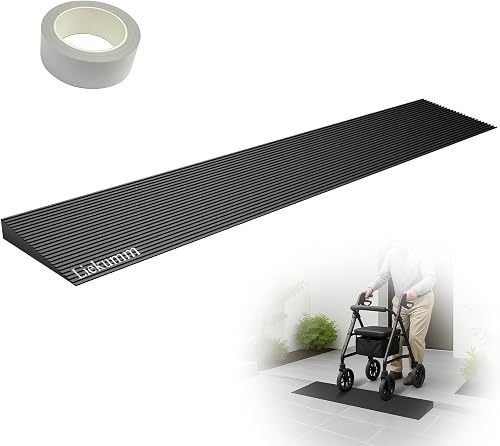
LIEKUMM 3/4" Rubber Threshold Ramp for Doorways
Best for a three-quarter-inch sill - 9
 Best for vehicle-only curb useCheck it
Best rubber threshold ramps for different rises and spaces
The best rubber threshold ramps match the measured rise and available floor space, with a surface and placement method suited to the location. For broader entry choices, compare wheelchair ramps for home.
These picks cover low indoor sills, wider transitions and curb use, but the 6 in Liramera model is vehicle-only. For bathroom access, compare shower threshold ramps for wheelchairs.
VEVOR 3" Rise Rubber Threshold Ramp: Best for wider, higher thresholds
- 3 in rise
- 35.5 in long x 17.7 in wide
- Beveled edges
- Grooved tread surface
A broad, solid rubber ramp with beveled edges on all sides. Its stated 3 in rise suits a higher threshold when the doorway and approach can fit its footprint.
Pros
- Wide 17.7 in ramp surface
- Beveled edges on all sides
- One-piece design
Cons
- 29 lb weight
- 3 in rise may be too high for a low sill
VEVOR's 3 in ramp suits a doorway or entry where you need a wider path over a higher threshold. For a bathroom entry, see rubber threshold ramps for showers.
Its 35.5 in length by 17.7 in width gives a larger approach surface than the narrow strips in this roundup.
The beveled edges on all sides allow approach from different directions, while the grooved tread is designed to add traction. The ramp is a one-piece solid rubber design, so there is no assembly step.
At 29 lb, it is heavier than several of the lower-rise options here. Measure the door opening and both approach areas, and check that the 3 in rise matches the obstacle before placing it.
Choose it when the threshold is close to 3 in and you have room for its footprint. For a step that needs a portable option, see portable wheelchair ramps for steps.
For a short rise, a lower ramp can reduce the amount of height you need to climb.
VEVOR Rubber Threshold Ramp: Best for a cut-to-fit doorway
- 1.6 in rise
- 35.4 in width
- Cuttable rubber
- Double-sided tape included
The 1.6 in rise and cuttable width offer flexibility for a doorway that needs a narrower fit. Double-sided tape is included for smooth floors.
Pros
- Cuttable width
- Tape included
- Grooved anti-slip surface
Cons
- 7.9 in depth needs approach space
- Mild rubber smell may be present
VEVOR's 1.6 in ramp is a practical fit for a medium-height threshold when width adjustment matters. It measures 35.4 in wide by 7.9 in deep and can be cut to fit a narrower opening.
The grooved surface is designed to add traction, and double-sided tape is included to help secure it on smooth floors. The ramp is solid natural rubber, with a slight rubber smell possible when new.
Its 7.9 in depth is shorter than the 35.5 in length of the 3 in VEVOR ramp, so compare the approach slope with your chair and available floor space. Confirm the cut line and placement before use.
Choose this ramp when its 1.6 in rise matches the sill and you need a narrower fit. If the threshold is only 1 in, Nuvium offers a lower profile.
Pyle Car Vehicle Curbside Driveway Ramp: Best for vehicle and curb transitions
- 4 ft wide
- Textured surface
- Mounting holes
- Bottom water or cable channel
This 4 ft curb ramp is aimed at driveways and raised sidewalk edges, with mounting holes for a permanent setup. Check its rise and slope for your specific wheelchair route before considering it.
Pros
- Wide 4 ft span
- Mounting holes
- Textured surface
Cons
- Rise and depth are not specified here
- Vehicle-focused design needs careful wheelchair fit checks
Pyle's ramp is designed for driveway and curb transitions, with a 4 ft span and textured surface. It includes mounting holes for permanent installation and a channel underneath for water or cable passage.
The available dimensions here don't give its rise or depth, which are essential for checking wheelchair fit. Confirm those measurements and the slope before considering it for a wheelchair route.
Its vehicle-focused design may fit a garage or curb setup better than a narrow doorway sill. Make sure the approach is straight and that the ramp is secured for the type of traffic at the location.
Choose it for a curb or driveway context when its full measurements fit your route. For an ordinary indoor sill, a doorway ramp with a known rise and depth is easier to compare.
Nuvium 1" Rise Rubber Threshold Ramp: Best for a one-inch sill
- 1 in rise
- 35.5 in wide
- Grooved surface
- Adhesive strips included
A low 1 in rise and 5.3 in depth suit a shallow sill where a taller ramp would add unnecessary height. Nuvium includes adhesive strips for clean, dry, smooth surfaces.
Pros
- Low 1 in rise
- Can be trimmed for narrower openings
- Adhesive strips included
Cons
- Narrow 5.3 in depth
- Check flooring compatibility before using adhesive
Nuvium's 1 in rise fits a low threshold where even a 1.5 in ramp would be too tall. Its 35.5 in width and 5.3 in depth make it a compact transition strip rather than a deep approach ramp.
The grooved surface is intended to add traction in wet or dry conditions. Adhesive strips are included to help reduce shifting on clean, dry, smooth surfaces, and the ramp can be trimmed for narrower openings.
Check that the 5.3 in depth works with your chair's approach and the space beside the sill. Nuvium also advises checking flooring compatibility before applying the adhesive.
Choose it for a measured 1 in rise and a narrow footprint. If you need more depth, compare a broader threshold ramp rather than assuming a longer width alone provides a gentler slope.
Silver Spring Solid Rubber Threshold Ramp: Best for a broad 1.5-inch rise
- 1.5 in rise
- 43.5 in wide
- Drainage channels
- Beveled side edges
Its 43.5 in width gives a broad approach across a 1.5 in threshold. Molded drainage channels and beveled side edges are useful details for an entry exposed to wet conditions.
Pros
- Broad 43.5 in width
- Drainage channels
- Beveled side edges
Cons
- Fixed size
- Measure the doorway and threshold before ordering
Silver Spring is the broadest fixed-size ramp in this group, at 43.5 in wide and 12.5 in deep. Its 1.5 in rise suits a threshold with a matching height.
Drainage channels are molded into the surface, and the side edges are beveled for approach from more than one direction. The maker describes it for indoor and outdoor use, including wet or icy conditions.
Its width and fixed size call for careful doorway measurements. Check the clear opening, door swing and available floor area before deciding that the broader platform will fit.
Choose it when a 1.5 in rise and wide approach are priorities. If your doorway is narrower, look at cuttable options and follow the manufacturer's guidance for trimming.
Heonay Threshold Ramps for Doorways Self-Adhesive Rubber: Best for a narrow adhesive strip
- 0.4 in height
- 39.4 in long
- Self-adhesive backing
- Can be cut to length
This low, narrow strip is designed for small changes in floor height, with self-adhesive backing and a grooved surface. Its 2 in width is a key fit check for wheelchair tires.
Pros
- Low 0.4 in height
- Can be cut to length
- No separate glue or nails needed
Cons
- 2 in width may be too narrow for some wheelchair approaches
- Confirm placement and fit before use
Heonay's self-adhesive strip is only 2 in wide and 0.4 in high, making it suited to a small floor-height change rather than a full-width threshold ramp. Its 39.4 in length can be cut to fit.
The grooved top is designed to add friction and create drainage paths. The narrow width is the main wheelchair fit check: measure the tire path and make sure the chair can cross without a wheel slipping off the strip.
The self-adhesive backing needs a suitable, clean surface. Check the doorway floor and the full route before attaching it, since moving an adhesive strip later may be difficult.
Choose it for a very low change in floor height only if its narrow profile fits your wheelchair's path. For a full doorway, use a ramp wide enough for the chair and its approach.
Linkloos 1.5" Rise Rubber Threshold Ramp: Best for a cuttable 1.5-inch rise
- 1.5 in rise
- 35.4 in wide x 7.87 in deep
- Beveled edges
- Cuttable rubber
The 1.5 in rise, beveled edges and cuttable design offer a flexible option for matching a doorway's width. Its one-piece rubber construction can be moved between locations.
Pros
- Can be cut to fit
- Beveled edges
- Indoor and outdoor use
Cons
- 7.87 in depth needs space on both sides
- Confirm the cut leaves a clean, stable edge
Linkloos combines a 1.5 in rise with a 7.87 in depth and a cuttable design. Beveled edges create an approach from the sides as well as the front.
Its 35.4 in width can be trimmed for a narrower opening, and the one-piece rubber construction is described for indoor and outdoor use. Measure the sill and opening first, then check that the remaining width will cover the full wheel path.
A 7.87 in depth may be too short for some chairs or approaches, depending on the rise and available room. The ramp can be moved between locations, but it still needs stable placement each time.
Choose it for a 1.5 in threshold where a cuttable width helps. If you want tape included for smooth flooring, compare the VEVOR 1.6 in ramp.
LIEKUMM 3/4" Rubber Threshold Ramp for Doorways: Best for a three-quarter-inch sill
- 0.8 in listed height
- 6 in depth
- 35.5 in width
- Adhesive strips included
The low profile suits a modest door sill, and adhesive strips are included for smooth floors. The title calls it a 3/4 in ramp while its dimensions give a 0.8 in height, so measure your threshold against the actual ramp height.
Pros
- Low profile
- Cuttable width
- Adhesive strips included
Cons
- Height needs careful matching
- 6 in depth may be short for some approaches
LIEKUMM's ramp is designed for a low threshold, with a 6 in depth and 35.5 in width. The product name says 3/4 in, while the dimensions give a 0.8 in height, so use the measured height to check fit.
The grooved surface is intended to improve traction, and adhesive strips are included for smooth floors. The width can be trimmed, and multiple ramps can be joined for a wider opening.
At 6 in deep, it offers a short approach. Check the sill height and the chair's clearance before choosing it, especially if you need a longer run to move across the rise.
Choose it for a small sill when a 0.8 in height fits your measurement. For a 1 in sill, Nuvium's ramp provides a stated 1 in rise.
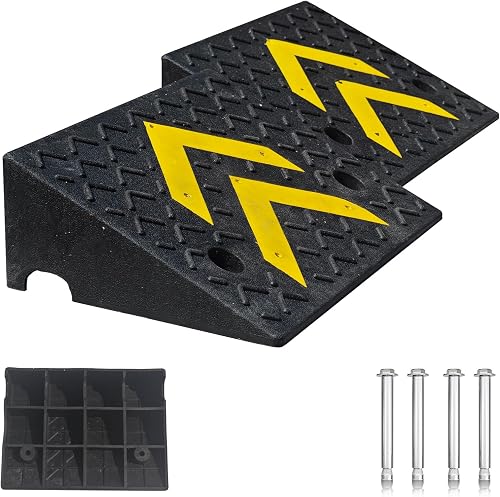
Liramera Rubber Curb Ramp: Best for vehicle-only curb use
- 6 in height
- Two-pack
- 17.13 x 13 in each
- Mounting holes
This 6 in curb ramp is explicitly described as vehicle-only and unsuitable for wheelchairs. It belongs only in vehicle transitions, not in a wheelchair route.
Pros
- Two ramps per pack
- Mounting holes
- Textured surface
Cons
- Maker says it is not suitable for wheelchairs
- 6 in height is not a low threshold transition
Liramera's 6 in curb ramp is not suitable for wheelchairs, according to its maker. Its stated use is vehicles, and the relatively steep slope rules it out as a wheelchair threshold option.
The two-pack measures 17.13 x 13 in per ramp and includes pre-drilled mounting holes. The textured surface and hollow grid base are described for vehicle use on curbs, driveways and loading areas.
Don't use this ramp to create a wheelchair route, even if its rubber construction looks similar to lower threshold ramps. A curb ramp needs the right height and slope for the device and the person crossing it.
Choose it only for a vehicle-only curb transition. For a wheelchair, compare a lower rise and a longer approach, and check the ramp's intended use before buying.
How do you measure for a rubber threshold ramp?
Measure the vertical rise from the lower floor to the top of the threshold, then measure the clear opening and the floor space on both sides. For a larger fixed route, compare a wood wheelchair ramp kit.
These three measurements tell you whether the ramp's height and footprint can fit.
Use a tape measure at the highest part of an uneven sill. Compare the ramp's stated rise with that measurement, then check whether the door can still open above it.
A ramp's width should cover the wheelchair's wheel path with enough room for a straight approach. For help sizing a 1 in rise, see what is the recommended ramp length for a 1 inch rise?.
Which rubber ramp surface and placement should you check?
Look for a surface pattern suited to the conditions at the doorway, and confirm how the ramp stays in place. Grooves, drainage channels and adhesive strips are different features, so match them to the floor and exposure.
For smooth tile, some models include double-sided tape or adhesive strips. Test compatibility with the flooring and follow the brand's placement directions; adhesive may not suit every surface.
For outdoor use, check drainage and whether the ramp can sit flat on the approach. A rubber ramp that shifts or rocks can make a transition less predictable, so inspect it after placement and during regular use.
Is a rubber threshold ramp better than aluminum?
Rubber can be a practical choice for a low threshold when you want a solid, textured transition, while aluminum ramps may suit other layouts or removable setups. The right material depends on the rise, required run and where the ramp will sit.
A fixed rubber strip may be simple to place at a doorway, but it can be heavy or narrow. Compare the best threshold ramps for wheelchairs across materials, and see best aluminum threshold ramps if you want a different construction.
How do you choose a rubber ramp for a doorway or garage?
Match the rise and footprint to the specific location. A doorway needs enough clear width and door clearance, while a garage threshold may need a longer or wider bridge for the approach.
For inside a home, compare these options with best indoor threshold ramps for doorways. For a garage entrance, see best garage door threshold ramp and check how water and vehicle traffic affect placement.
A removable ramp can help when you need to move it between locations, but moving it means checking the fit and stability each time. Read what is a removable wheelchair ramp? before choosing a portable setup, and review what are the types of wheelchair ramps? for other designs.
Which rubber threshold ramp should you choose?
Choose VEVOR's 3 in ramp when your measured rise and wide approach suit its footprint. Pick Nuvium for a 1 in sill, Silver Spring for a broad 1.5 in approach, or a cuttable VEVOR or Linkloos ramp when width adjustment matters.
The best rubber threshold ramp is the one that matches the sill height, covers the wheelchair's path and stays stable on the floor. Keep the Liramera ramp for vehicle use only, since it is described as unsuitable for wheelchairs.
Our top 3 picks at a glance
-
1
Best for wider, higher thresholds
VEVOR 3" Rise Rubber Threshold Ramp
9.7/10 our score
See it on Amazon -
2
-
3
Best for vehicle and curb transitions
Pyle Car Vehicle Curbside Driveway Ramp
9.5/10 our score
See it on Amazon
Frequently asked questions
How do I choose the right rubber threshold ramp height?
Measure the threshold vertically from the lower floor to the top surface, then choose a ramp with a matching rise. A ramp that is too low leaves a bump, while one that is too high can interfere with a door or create a lip at the top.
For a 1 in rise, see our guide to recommended ramp length for a 1 inch rise.
Are rubber threshold ramps suitable for outdoor use?
Some rubber ramps are described for indoor and outdoor use, but placement still matters. Check the ramp's rise, surface, fit, water drainage and attachment method, then make sure it stays in position on the actual ground where you'll use it.
For a sloped driveway or raised garage edge, compare options in our guide to the best garage door threshold ramp.
Can I cut a rubber threshold ramp to fit?
Some models are described as cuttable, including VEVOR's 1.6 in ramp, Nuvium's 1 in ramp and Linkloos's 1.5 in ramp. Check the intended cut method and keep the finished edge stable and clear of the wheel path.
Fixed-size ramps, such as Silver Spring's, need a width check before you buy.
How wide should a wheelchair threshold ramp be?
Measure the clear opening and the path the wheelchair needs to travel, including room for a straight approach. A ramp's full width may not equal its usable path if a door frame, wall or nearby furniture narrows the route.
The 43.5 in Silver Spring ramp is the widest option here; compact strips need extra care to confirm tire fit.
Can a steep curb ramp work for a wheelchair?
Not necessarily. Liramera explicitly says its 6 in curb ramp has a relatively steep slope and is not suitable for wheelchairs, so reserve it for vehicle use.
For wheelchair access, compare the rise and available run, and review the types of wheelchair ramps before choosing a ramp.